







How we like to work
To enable you to improve, grow, build, … your business in a regenerative way, Yeast creates a context for reflective and pragmatic collaboration.
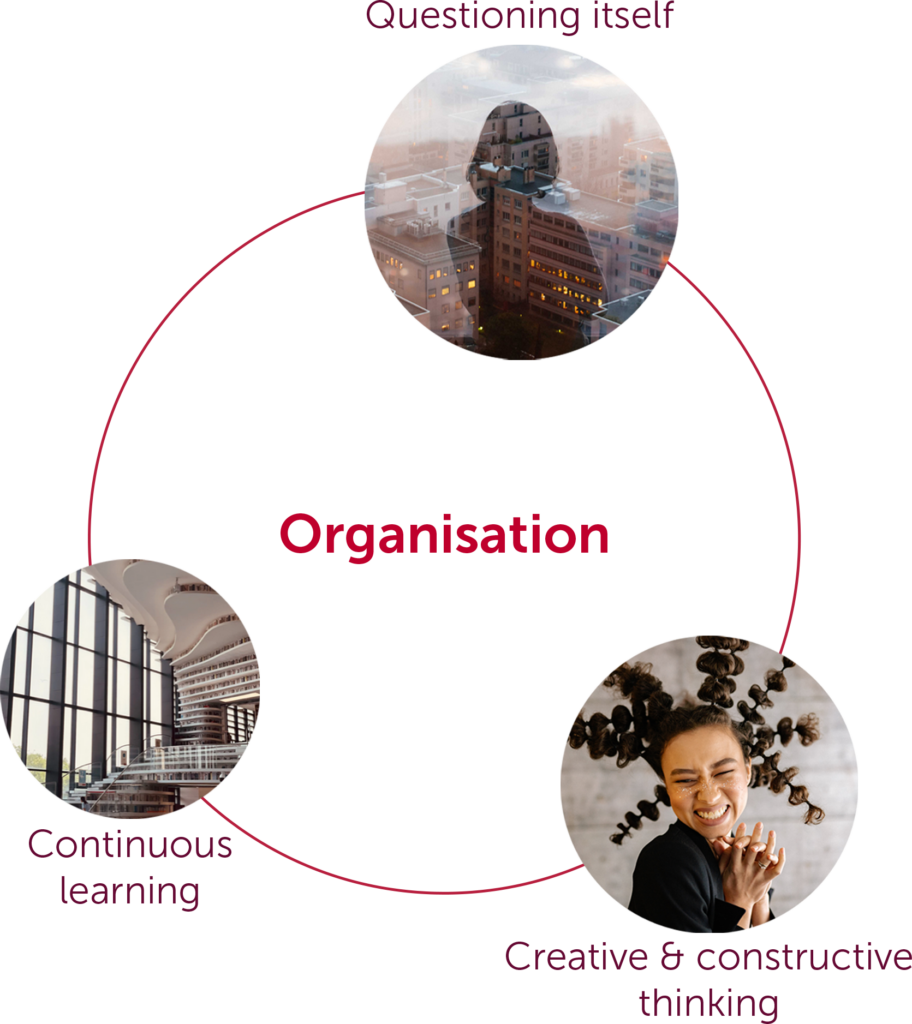
To enable you to reflect and take action as individuals, as a team, as an organisation.
We ask questions & highlight what we observe.
To enable you to connect across departments and connect your organisation within your ecosystem.
We listen deeply & connect truly as human beings.
To enable you to create concrete and regenerative solutions.
We stimulate you & your teams to think out of the box.
To enable you to continue your own regeneration.
We make impact in a tangible and regenerative way.
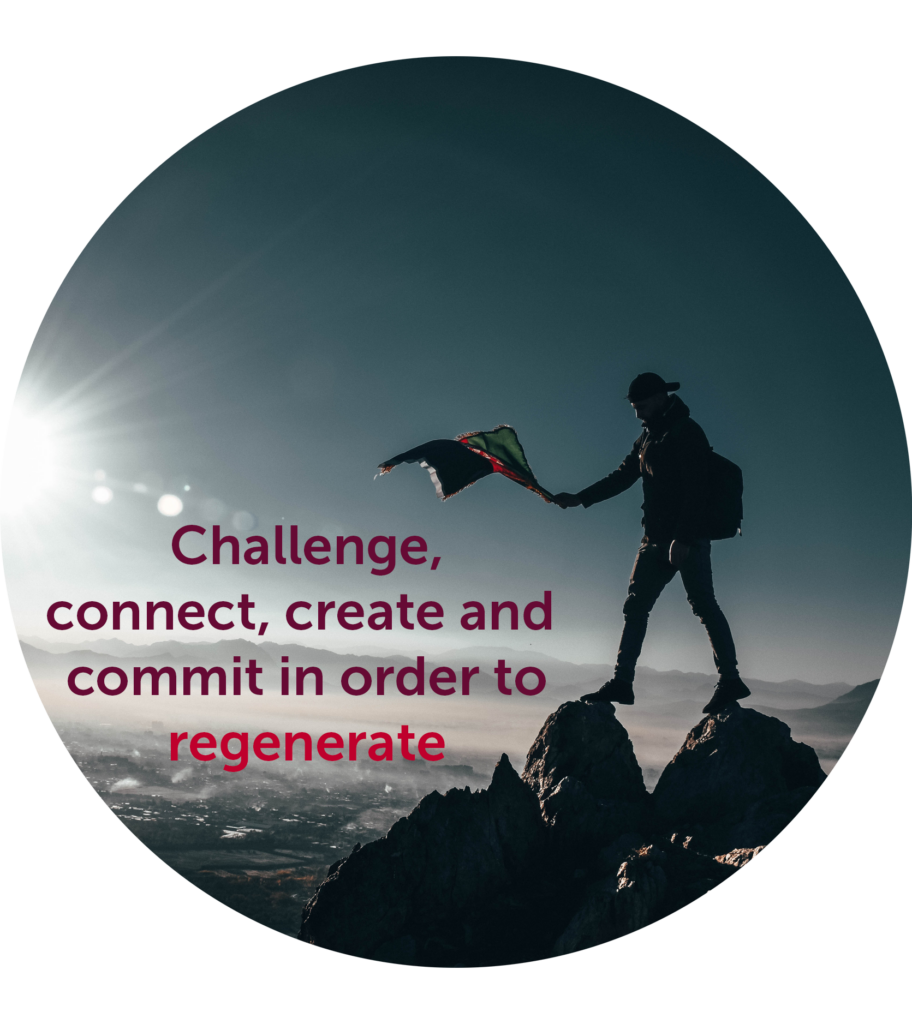
Challenge ![]()
To enable you to reflect and take action as individuals, as a team, as an organisation.
We ask questions & highlight what we observe.
Connect ![]()
To enable you to connect across departments and connect your organisation within your ecosystem.
We listen deeply & connect truly as human beings.
Create ![]()
To enable you to create concrete and regenerative solutions
We stimulate you and your teams to think out of the box.
Commit ![]()
To enable you to continue your own regeneration
We make impact in a tangible and regenerative way.
Want to know more?
The Yeast approach to regeneration
The impact of regeneration
- Team members will think more creatively and act more decisively.
- Team members will have a strong sense of ownership and develop a close connection with the purpose of the organisation.
- Team work will be optimised, resulting in increased productivity.
- The organisation will become more resilient.
What’s more, we help your organisation track improvements in these areas along the way using a methodology called Return on Expectations. Here’s how it works: Right at the start, we ask you for your thoughts about a couple of statements and where you want to be as an organisation. We keep a record of your answers. Then, during the regeneration process, we ask you the same questions at different points in time so that we can help you measure your progress. The process focuses on self-perception, which means that you take responsibility for the improvements you want to see. We have found this to be a very practical approach.
By working with Yeast, your organisation can expect to see a real impact in terms of initiative taking and proactivity, team working and resilience:
- Team members will think more creatively and act more decisively.
- Team members will have a strong sense of ownership and develop a close connection with the purpose of the organisation.
- Team work will be optimised, resulting in increased productivity.
- The organisation will become more resilient.

Overall, your organisation will develop a culture that prizes individual and collective leadership and people will take responsibility for their own health and well-being. What’s more, we help your organisation track improvements in these areas along the way using a methodology called Return on Expectations. Here’s how it works: Right at the start, we ask you for your thoughts about a couple of statements and where you want to be as an organisation. We keep a record of your answers. Then, during the regeneration process, we ask you the same questions at different points in time so that we can help you measure your progress. The process focuses on self-perception, which means that you take responsibility for the improvements you want to see. We have found this to be a very practical approach.
Our methodologies
We use proven methodologies enriched by our experience.
We use methodologies that are
- Scientifically proven
- Enriched by experience
- Translated into business practice
- Adapted to the need of the individual and the organisation
Creative Problem Solving
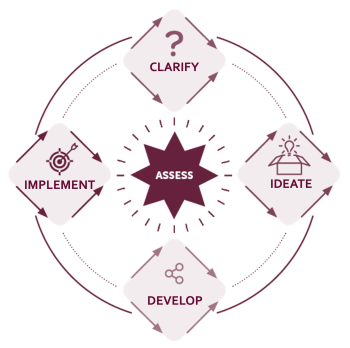
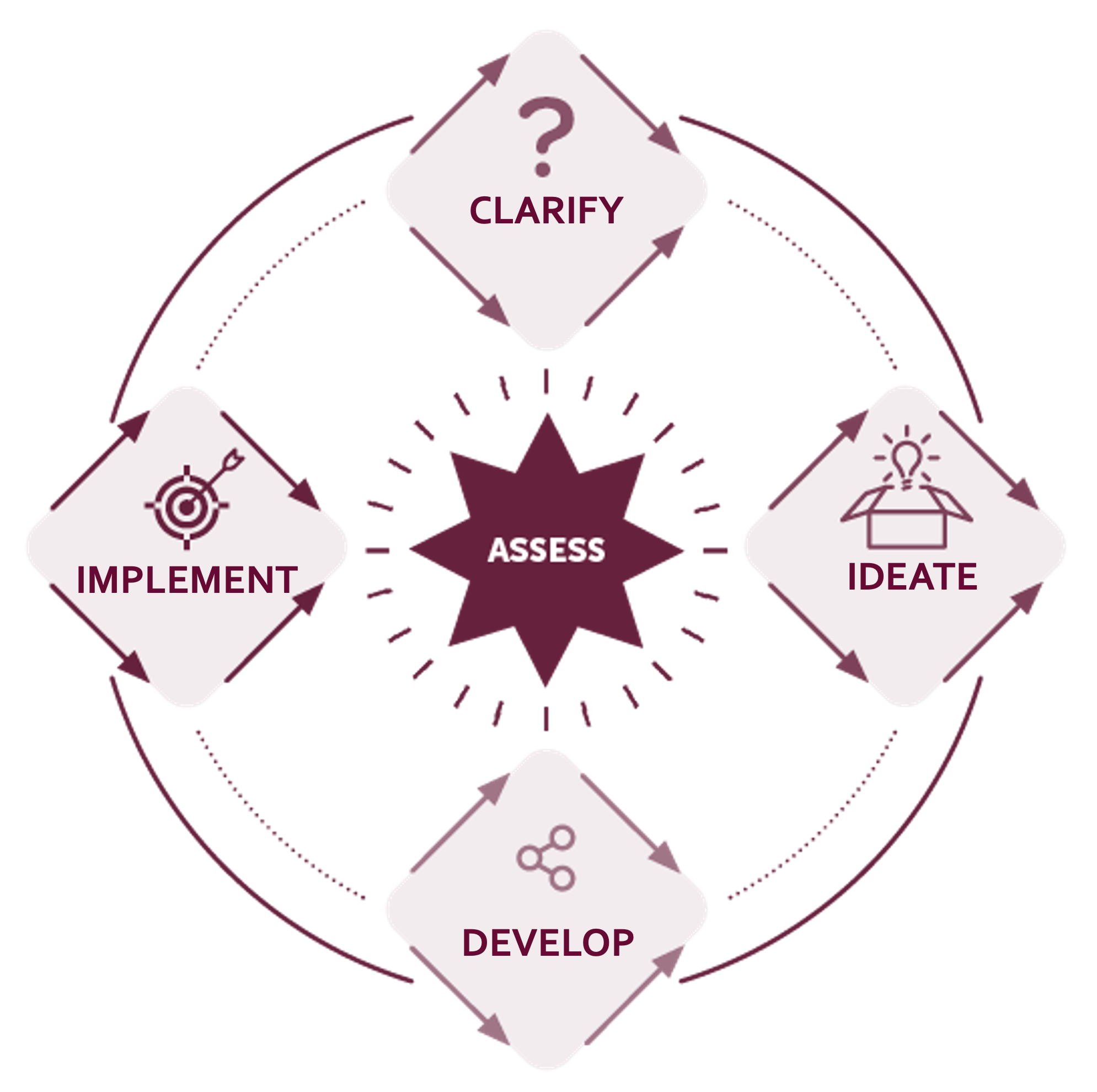
In its basic form, The Creative Compass is made up of four stages: “clarify, ideate, develop & implement”. Each individual step is broken down in divergent thinking and convergent thinking, which means first generating a myriad of options without judging them and evaluating them in a next step.
The creative compass provides a common language that supports communication, collaboration and helps to manage tensions in addressing complex problems or challenges.
By consciously applying the different stages and the language of the Creative Compass participants learn to structure a process or a meeting more efficiently.
Discover your creative thinking profile: FourSight®
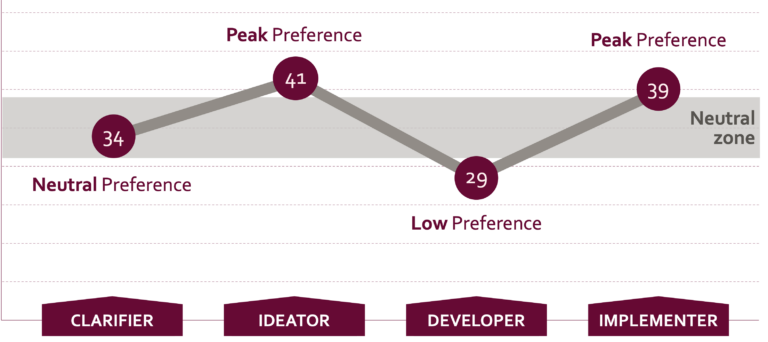
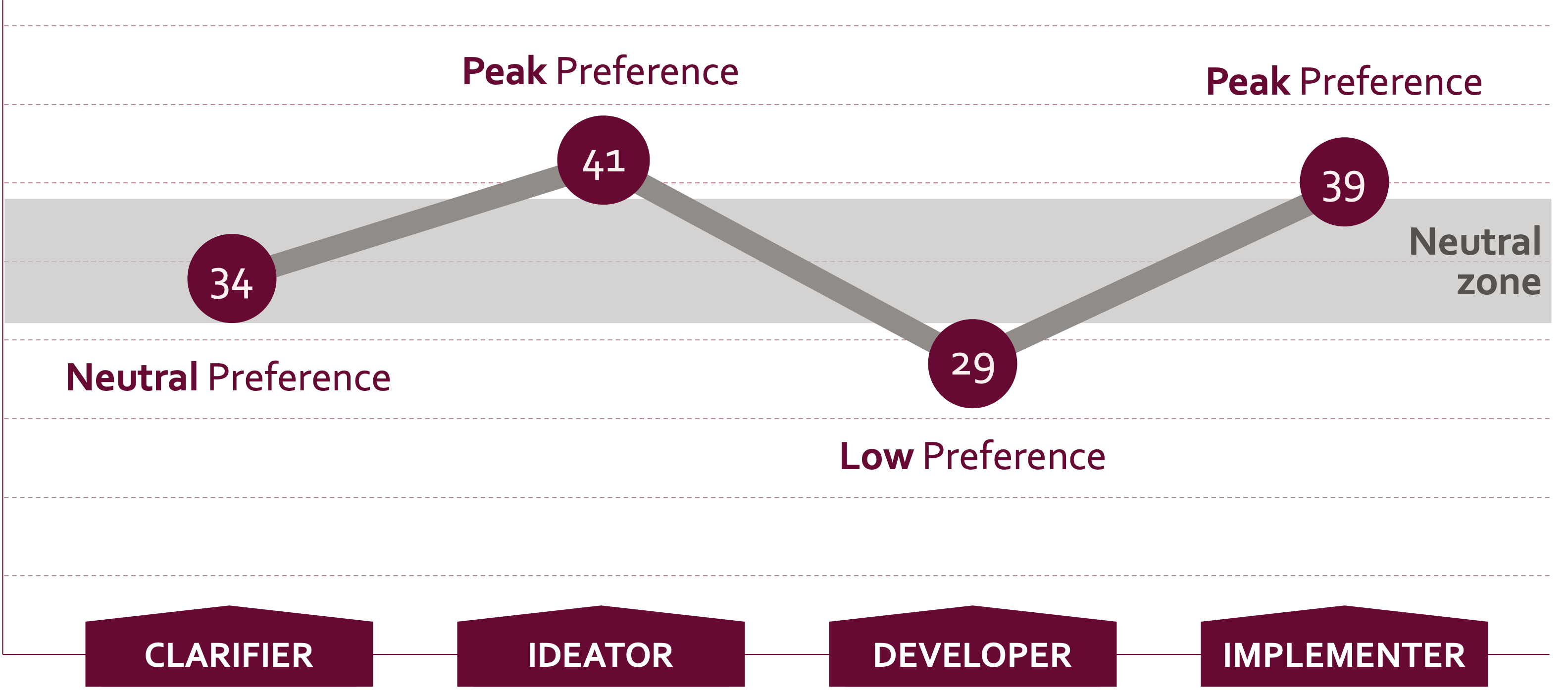
In addition to explaining and applying the Creative Compass in practice, Yeast makes use of the FourSight assessment tool, that helps reveal people’s personal preference for one or more of the stages of the Creative Compass when tackling a challenge.
We use the FourSight tool to optimise team collaboration by using the basic principles and techniques of the Creative Compass with emphasis on the personal FourSight thinking preferences.
Participants uncover their individual thinking profile, what that signifies for their creative approach to problem situations, where their strengths and pitfalls lie and how they keep them in balance.
Once they understand their own thinking profile and that of their colleagues, it helps them to better understand the rational behind other people’s behaviours.
Conditions to build a performant team: Lencioni’s model
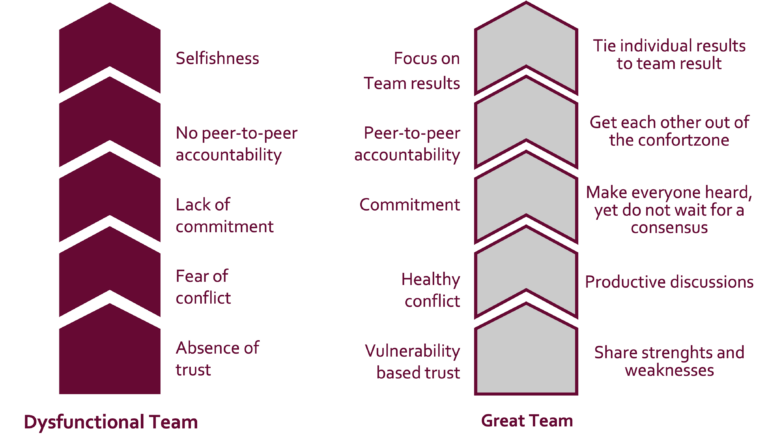
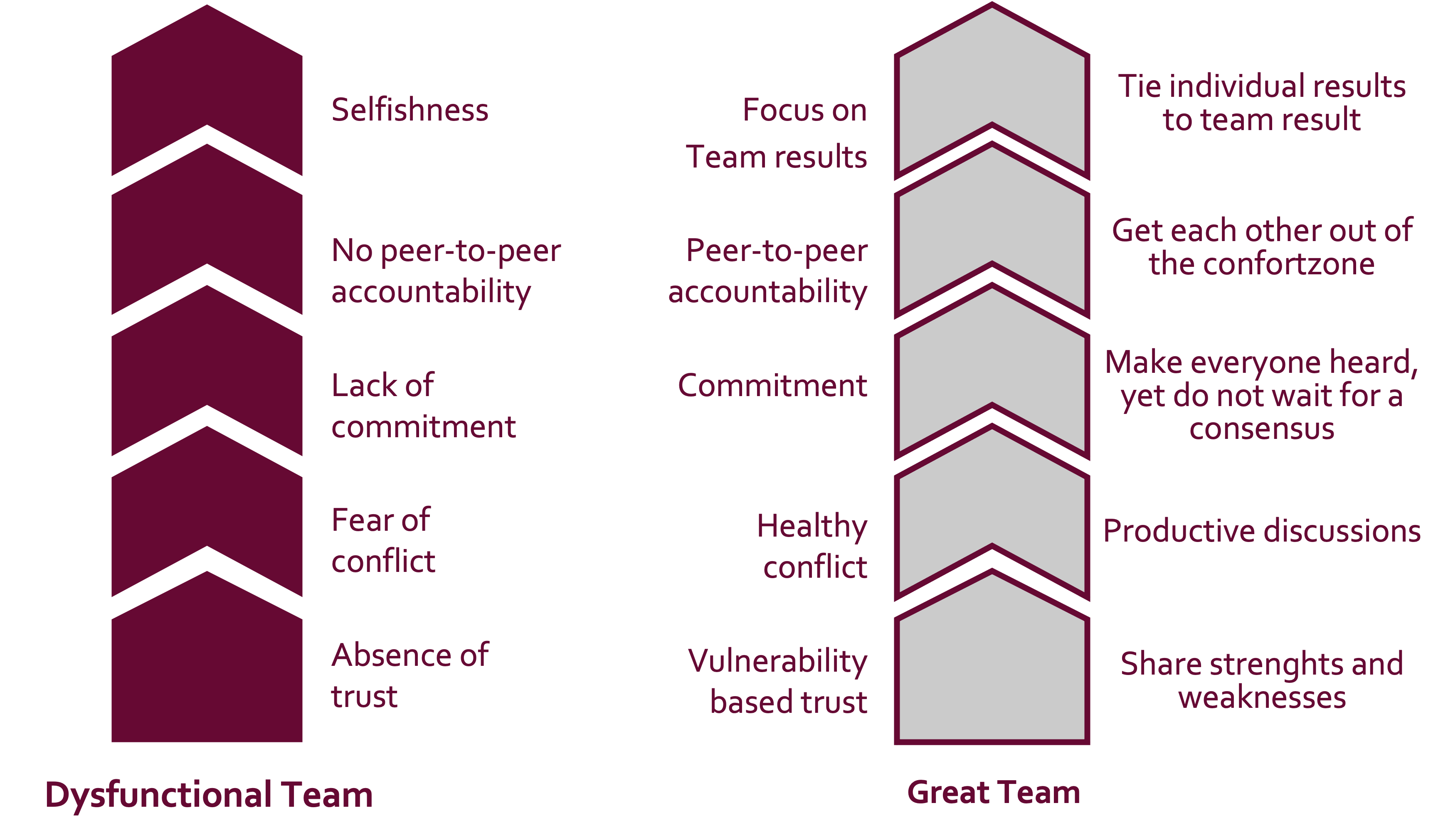
We apply the Lencioni model to guide a group of colleagues to become a true performant team.
- Create a context to share strengths and weaknesses and tell stories that show humanity and vulnerability;
- Facilitate courageous conversations that enable healthy conflicts to emerge and be solved;
- Make sure everybody expresses their opinion, is heard and feels heard in order to accept and commit to the team objectives the decisions that are taken;
- Invite everybody to challenge each other and feel comfortable doing so;
- Make sure every team member feels responsible for the results of the team/ department/organisation and is motivated to and capable of tying individual results to the team results.
Inner Development Goals as a leadership competence model
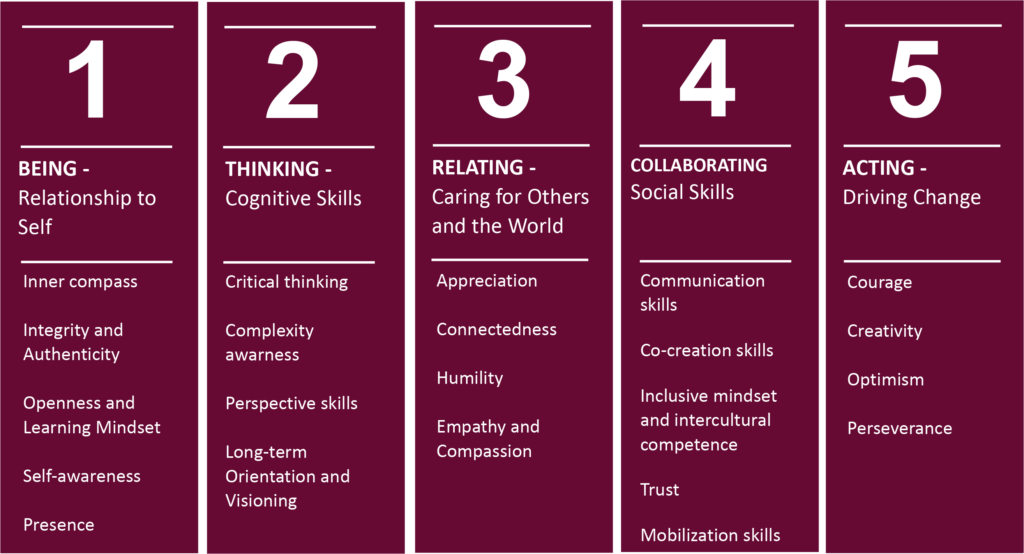
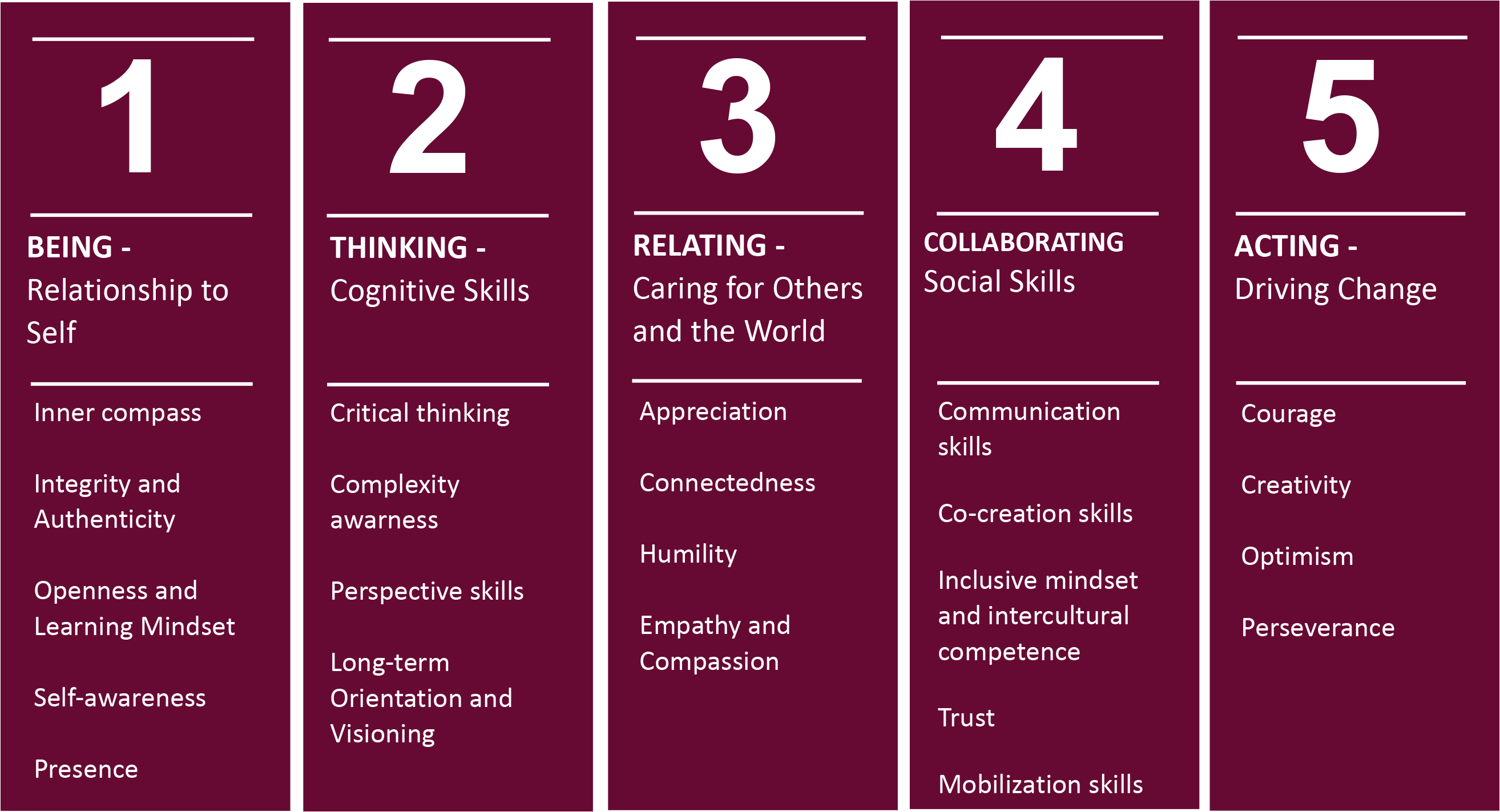
As we want to focus on the skills, mindset and way of working that are needed to make a positive impact on society, we explicitly integrate the Inner Development Goals (IDG’s) in our work. It is a framework of science-based leadership skills and qualities that help us to live purposeful, sustainable and productive lives, hence build purposeful, sustainable and productive organisations.
The Inner Development Goals (IDG’s) have been developed as a blueprint of the capabilities, qualities and skills we need in order to achieve the 17 Sustainable Development goals (SDG’s).
In its basic form, The Creative Compass is made up of four stages: “clarify, ideate, develop & implement”. Each individual step is broken down in divergent thinking and convergent thinking, which means first generating a myriad of options without judging them and evaluating them in a next step.
The creative compass provides a common language that supports communication, collaboration and helps to manage tensions in addressing complex problems or challenges.
By consciously applying the different stages and the language of the Creative Compass participants learn to structure a process or a meeting more efficiently.

In addition to explaining and applying the Creative Compass in practice, Yeast makes use of the FourSight assessment tool, that helps reveal people’s personal preference for one or more of the stages of the Creative Compass when tackling a challenge.
We use the FourSight tool to optimise team collaboration by using the basic principles and techniques of the Creative Compass with emphasis on the personal FourSight thinking preferences.
Participants uncover their individual thinking profile, what that signifies for their creative approach to problem situations, where their strengths and pitfalls lie and how they keep them in balance.
Once they understand their own thinking profile and that of their colleagues, it helps them to better understand the rational behind other people’s behaviours.

Conditions to build a performant team: Lencioni’s model
We apply the Lencioni model to guide a group of colleagues to become a true performant team.
- Create a context to share strengths and weaknesses and tell stories that show humanity and vulnerability;
- Facilitate courageous conversations that enable healthy conflicts to emerge and be solved;
- Make sure everybody expresses their opinion, is heard and feels heard in order to accept and commit to the team objectives the decisions that are taken;
- Invite everybody to challenge each other and feel comfortable doing so;
- Make sure every team member feels responsible for the results of the team/ department/organisation and is motivated to and capable of tying individual results to the team results.

Inner Development Goals as a leadership competence model
As we want to focus on the skills, mindset and way of working that are needed to make a positive impact on society, we explicitly integrate the Inner Development Goals (IDG’s) in our work. It is a framework of science-based leadership skills and qualities that help us to live purposeful, sustainable and productive lives, hence build purposeful, sustainable and productive organisations.
The Inner Development Goals (IDG’s) have been developed as a blueprint of the capabilities, qualities and skills we need in order to achieve the 17 Sustainable Development goals (SDG’s).